



Okay, so check this out—Solana moves fast. Whoa! Transactions zip by and blocks stack up quicker than a line at a food truck on a sunny day in Brooklyn. My instinct said it would be messy to follow, but then I dug in and things clicked in a way that felt surprisingly tidy. Initially I thought on-chain data would be all noise, though actually there are clear patterns if you know where to look and how to filter the clutter. I’m biased, but once you learn a few tricks, Solana’s clarity becomes a real strength for traders, builders, and collectors alike.
Here’s the thing. Seriously? Network throughput is both blessing and curse. Short confirmation times let you experiment without fear, yet the pace can hide micro-trends that matter. A token spike that lasts 30 seconds looks like nothing when you glance at a one-hour chart, but it can represent enormous liquidity shifts and MEV activity. Something felt off about treating Solana like Ethereum; the semantics differ and so must the tooling you choose. I’m not 100% sure of everything—there’s always somethin’ new to learn—but the right explorer and trackers make the difference.
Start with analytics basics. Wow! Look at cluster health, transaction latency, and fee curves first. Medium-level metrics like TPS (transactions per second) and block times tell you when the network is stressed versus just humming along. Longer, more subtle signals—like recurring small swaps on the same accounts—can reveal arbitrage bots or wash-trading patterns that impact price action across DEXes. On one hand these are technical diagnostics; on the other hand they’re the story of market participants, their strategies, and occasional bad actors.
Token tracking isn’t rocket science, if you approach it like detective work. Hmm… you want to know token distribution, transfer flows, and holder concentration. Really, it’s about relationships: who moves coins, when, and through what routes—CEX withdrawals, DEX liquidity pools, or program-derived-address (PDA) funnels. Longer investigations might involve correlating token movements with on-chain events like minting, burns, or stake changes, and once you spot a recurring transfer pattern, you can often back out the operational behavior of a project. I’ll be honest—this part bugs me when platforms obfuscate data behind paywalls, but many tools give surprisingly deep free views.
Okay, so check this out—NFT tracking on Solana deserves its own paragraph. Wow! Floor prices on marketplaces like Magic Eden or OpenSea (when bridged) can move fast. Medium-term indicators—such as unique buyer counts and wallet retention rates—often predict momentum better than headline volume numbers. Longer signals, like cohort analysis of first buyers who then become repeat buyers, reveal which collections have cultural stickiness versus those that are purely speculative. On a practical note, eyeballing wallet graphs and token age distributions will save you from common FOMO traps.
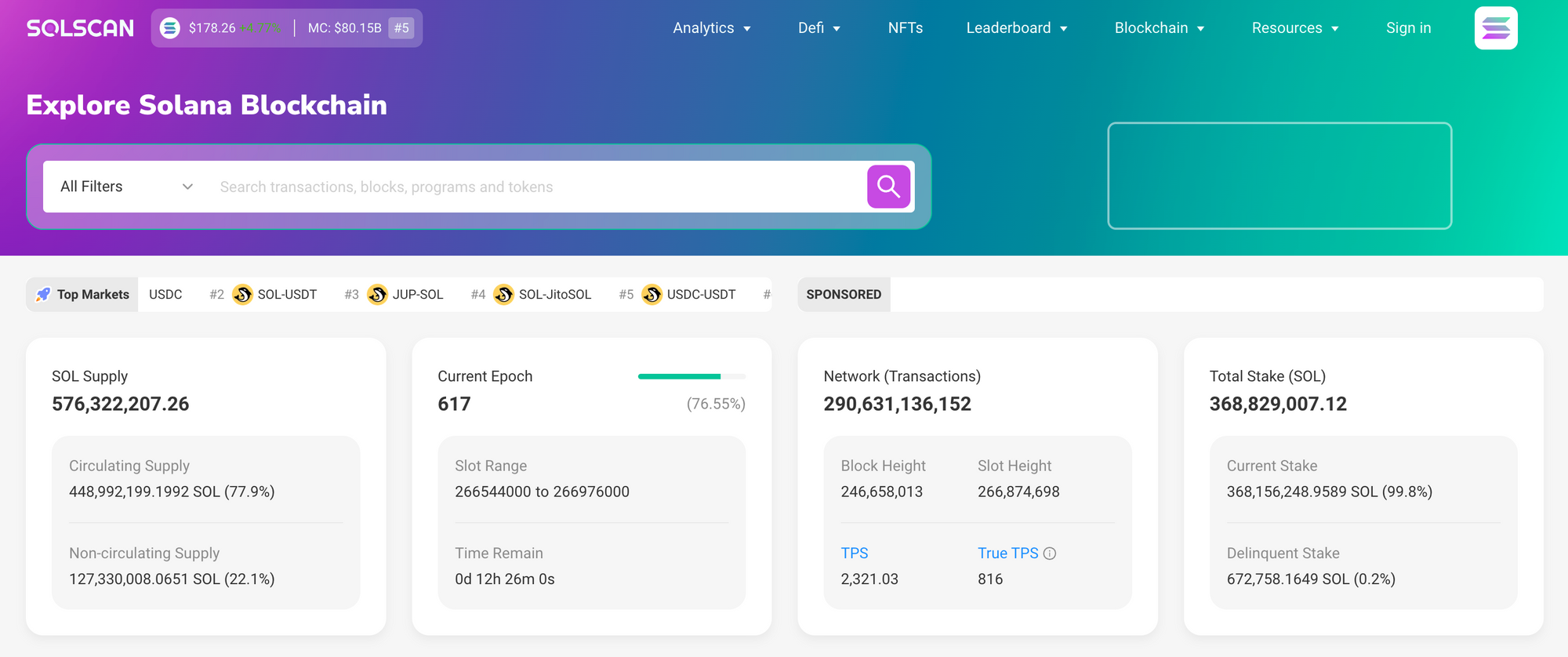
Choosing the right explorer and tools
Pick tools that match your workflow. Whoa! Some folks like raw transaction logs, others want aggregated metrics and alerts. For hands-on investigation and real-time token tracking, I often point people to Solscan—check it out here—because it balances readable UI with deep drill-downs. On one hand, raw RPC logs are indispensable for forensic work; on the other hand, dashboards speed up everyday decisions by turning thousands of rows into clear visuals. My instinct said that a single tool couldn’t do both well, but Solscan and similar explorers have been bridging that gap pretty effectively.
Token tracker features to prioritize. Wow! Holder distribution charts, largest transfers, and historical supply changes are must-haves. Medium features—such as watchlists, price alerts, and liquidity pool snapshots—are very very handy for active traders. For deeper analysis, look for transfer graphs that show flow paths between wallets and smart contracts, because those reveal whether whales are moving through DEXs, or if tokens are being consolidated into cold storage. These flows, when timed with on-chain events, can be predictive if you interpret them correctly.
NFT-specific metrics matter differently. Hmm… unique holders, minting cadence, and creator royalties tell a lot about long-term viability. Short-term spikes in listings can mask a looming dump. Medium signals like wallet overlap between notable collections—buyers who own Collection A and Collection B—can point to cultural cross-pollination that raises floor price sustainably. Longer-term analysis that tracks secondary market recirculation rates helps separate cult favorites from flash-in-the-pan projects. I’m not claiming perfect foresight here, but data reduces guesswork considerably.
Practical workflows I use. Whoa! Start with a hypothesis—say, “this token may be moving to an exchange.” Then filter transfers out of top holder wallets over the last 24 hours, flag transfers to known CEX deposit addresses, and watch for sudden upticks in sell pressure on DEXes. Medium steps include setting alerts for large transfers or abnormal trade sizes. Finally, run a deeper check for suspicious TPAs (third-party addresses) and repeated small transfers that might evade thresholds; these often hint at bot behavior or wash-trading. It’s a chain: each step narrows the noise until the signal is actionable.
On data hygiene and pitfalls. Hmm… not all on-chain signals mean what you think they do. Short bursts of volume can be market-making operations, not real demand. Medium-term on-chain metrics can be skewed by wrapped tokens and bridge activity; bridging liquidity introduces noise that confuses naive metrics. Longer-term trends are more reliable but take patience, and that patience can be hard when you’re watching price candles tick. Something else to watch—smart contract upgradability on Solana can change token behavior overnight if authority keys shift, so always check upgrade authorities and multisig histories.
Alerts and automation. Wow! You can’t watch everything manually. Medium automation—alerts for large holders moving, drops in wallet counts, or sudden minting events—keeps you honest. Longer automations that tie on-chain alerts to off-chain systems (like Slack or a trading bot) let you act in seconds rather than minutes, which matters a lot on Solana. On a personal note, I built small automations that reduced my reaction time and saved me from several bad trades—so yeah, automation pays off. But be careful with false positives; good rules require iteration.
Common Questions about Solana Analytics
How do I track token holders and whale activity?
Start with the token’s mint address and use an explorer to list top holders. Wow! Watch for transfers to known exchange deposit addresses and for sudden concentration changes in the top 10 wallets. Medium-level analysis includes time-series of holder counts and Gini coefficients to measure concentration; longer investigations look at recurring transfer patterns and wallet clusters that indicate coordinated movement.
Can I detect wash trading or bot activity on Solana?
Yes, though it takes pattern recognition. Whoa! Look for repeated buys and sells between a small set of wallets, identical trade sizes, or circular token flows. Medium indicators include abnormal trade frequency relative to unique buyer counts and unusually low slippage trades that suggest internal routing. Deeper analysis might require correlating off-chain orderbook data or inspecting program logs to see if trades are programmatic.
Which metrics predict NFT floor movement?
Unique buyer rate, list-to-sale conversion, and percent of holders who relist are useful. Hmm… short-term spikes are noise; sustained increases in new unique holders and lower list-to-sale ratios are stronger predictors. Longer signals—like increasing repeat buyers and organic social mentions tied to sales—often foreshadow durable floor increases.
Final thoughts, and yes—I’m leaving you with a practical nudge. Wow! Tools and explorers turn Solana’s speed from a headwind into an advantage. Medium steps—learn a few dashboards, set alerts, and practice tracing token flows—and you’ll catch patterns other people miss. Longer-term: combine on-chain data with community signals, project governance moves, and basic macro awareness; that mix gives you the best edge. I’m not preaching perfection—far from it—but with the right habits, you can make faster, smarter decisions that feel less like gambling and more like informed strategy.